
19 September 2025 · We Offsite
Ensuring Compliance & Maximizing Savings for Remote Team Travel
Remote team travel made easy: strategies for compliance, budget control, and cost savings in corporate offsites, retreats, and distributed team events.


For distributed and remote companies, the shift away from a central office has created unprecedented freedom and flexibility. Teams can now collaborate across continents, hiring the best talent regardless of geography. But when it comes to organizing company offsites and team retreats, this global model introduces new challenges: navigating complex compliance requirements while keeping costs under control.
Without the right approach, what should be an inspiring opportunity to bring people together can quickly become a logistical and financial headache.
This comprehensive guide explores how to balance compliance and cost savings, so your company can focus on what really matters: creating meaningful connections that strengthen culture and collaboration.
1. The Imperative of Compliance: Mitigating Risk in a Global Workforce
Compliance is not just a buzzword; it’s a non-negotiable safeguard for your company. For remote teams, every offsite or work-related trip can introduce complex legal and policy considerations that, if overlooked, can lead to serious consequences. A successful offsite, therefore, begins with meticulous planning that prioritizes adherence to regulations and internal policies.
Building a Foundation with Policy
A clear, well-defined corporate travel policy is the single most important tool for ensuring in-policy travel booking and providing clear rules for your team. This policy should be more than a static document — it should function as a living guide.
Checklist: What a Robust Travel Policy Should Cover
-
Approved booking platforms and procedures
-
Expense categories with hard limits (e.g., flights, hotels, meals)
-
Reimbursement rules and required documentation
-
Safety and emergency protocols
-
Preferred suppliers (airlines, hotels, coworking venues)
-
Standards for accommodations (e.g., economy class for flights, nightly budget caps)
By proactively defining expectations, you empower employees to make compliant choices while giving leadership peace of mind.
Navigating the Global Legal Landscape
When a distributed team gathers internationally, a host of legal issues can arise:
-
Tax implications & permanent establishment risk: Hosting work abroad could unintentionally create tax liabilities.
-
Immigration & visa compliance: Even short trips can trigger visa or work permit requirements.
-
Labor law differences: Rules on overtime, rest days, or working hours vary widely.
Case in point: A U.S.-based SaaS company flew its team to Spain for a week-long retreat. Because Spanish labor law requires compensation for weekend work events, the company faced unexpected costs. Another firm, however, consulted local counsel beforehand and structured its schedule accordingly — saving thousands.
The takeaway: compliance isn’t a one-time task. It’s a continuous process of planning, monitoring, and adapting to protect your business.
2. Strategies for Maximizing Savings: From Negotiation to Control
Once compliance is secure, the next step is ensuring your offsite budget is being used effectively. Maximizing savings doesn’t mean cutting corners — it means being strategic about where and how you spend.
Unlocking Cost-Effective Offsites
The key to significant savings lies in direct negotiation and smart planning.
Tactics that Work:
-
Bundle deals: Negotiate accommodations + meeting rooms + catering as a package.
-
Flexible cancellation: Protect against last-minute changes with risk-sharing clauses.
-
Shoulder-season travel: Schedule offsites during off-peak months for discounts of 20–30%.
-
Group leverage: Use your numbers to negotiate lower per-person rates on everything from shuttle services to activities.
Industry benchmarks show that companies that centralize travel bookings save 15–20% annually compared to decentralized approaches.
Mastering Your Budget
Transparency is essential for avoiding unpleasant surprises. Start with a detailed budget that covers:
-
Flights and ground transport
-
Accommodation
-
Meeting space and equipment
-
Meals and group activities
-
Insurance and contingency fund (5–10% buffer)
A budget dashboard that compares projected vs. actual costs by category is an invaluable tool. It allows finance leaders to spot overspending early and make adjustments before it’s too late.
👉 Pro tip: Don’t forget hidden costs like resort fees, AV equipment, or local taxes — these can add up quickly if left unmonitored.
3. The Efficiency Advantage: Saving Your Most Valuable Resource
The biggest hidden cost in offsite planning isn’t always financial; it’s the time and energy of your internal team. A convoluted, manual process can create stress, inefficiency, and burnout.
From Complex to Seamless
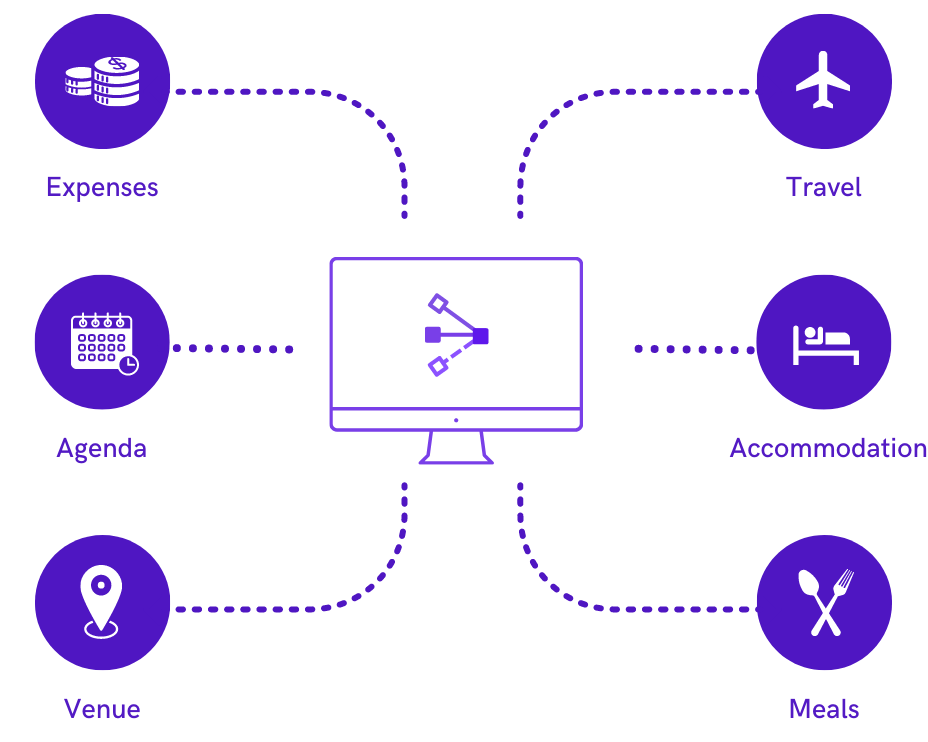
An end-to-end planning solution consolidates all details — flights, venues, meals, agendas, and expenses — into one centralized system. This eliminates the need to juggle spreadsheets, back-and-forth emails, and multiple vendor contacts.
Reclaiming Time
Automation doesn’t just save hours; it frees teams to focus on strategy and experience. Instead of spending 20+ hours booking flights or chasing receipts, organizers can invest time in designing meaningful agendas and high-impact activities.
Save 80% of time planning your team offsite
Say goodbye to overspending and endless planning hours. Achieve 100% compliance and save time and money with an end-to-end planning solution.
Schedule a call with us & plan your next staff retreat in a breeze!
4. Planning for the Unexpected: Risk & Contingency Strategies
Even the best-laid plans can encounter turbulence. Smart leaders build contingencies into their offsite framework.
Common Risks & Mitigation Strategies
-
Flight cancellations: Negotiate rebooking terms and always keep a 24/7 travel support option.
-
Health emergencies: Ensure all employees are covered by international health insurance.
-
Political or weather disruptions: Have hybrid or local backup plans in place.
-
Unexpected expenses: Always allocate 5–10% of the budget as a buffer.
A risk plan may feel optional — until it isn’t. Having one ensures your retreat remains productive and safe, no matter what happens.
The We Offsite Advantage: From Stress to Success
At We Offsite, we specialize in helping distributed companies transform retreat planning from a source of stress into an opportunity for growth. With our support, you can:
- Compare travel costs and find the cheapest dates for your team retreat.
- Ensure your employees book their offsite travel according to company policy.
- Receive transparent budgets with no hidden costs.
- Access exclusive negotiated rates for venues and suppliers.
- Get personalized support at every stage — before, during, and after the event.
📌 Best of all, you can get a free customized proposal. We’ll prepare handpicked options for your corporate retreat, refine them until they’re perfect, and ensure your offsite is both compliant and cost-effective.
Key Takeaways
-
Define and communicate a robust travel policy
-
Centralize all bookings and approvals
-
Negotiate directly for group discounts
-
Track budget vs. actual in real-time
-
Always plan for contingencies
By following these steps, you’ll transform offsite planning from a stressful, high-cost process into a strategic advantage for your organization.
👉 Need to define a term? please refer to our Glossary for a full list of definitions.